
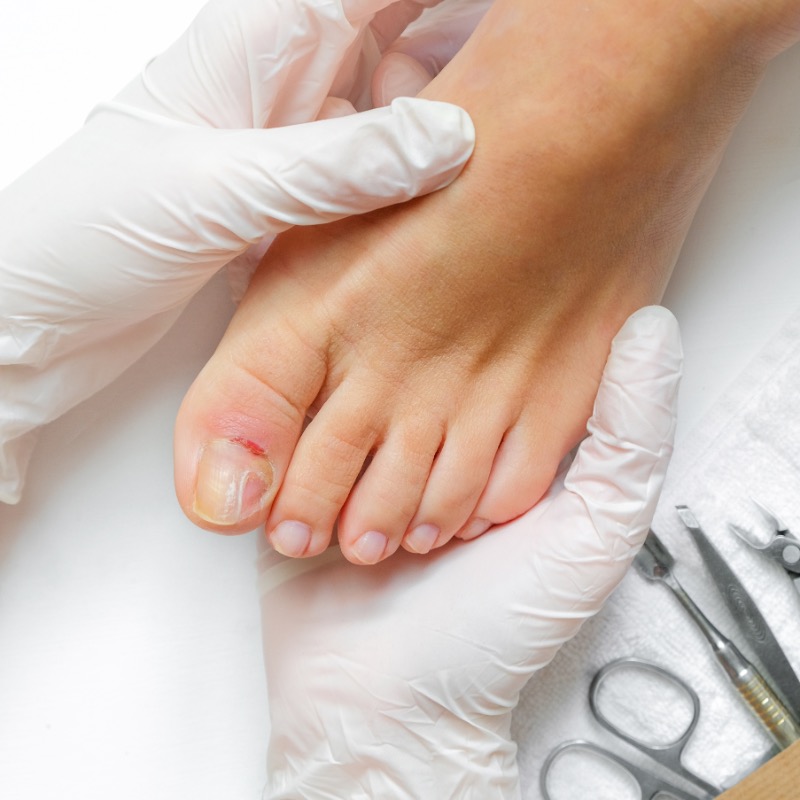
An ingrown toenail happens when the edge of the nail grows into the surrounding skin instead of sitting flat. This most often affects the big toe and can cause pain, swelling, and redness. In more advanced cases, infection can develop, leading to discharge and difficulty walking.
Mild ingrown toenails can sometimes be managed at home using warm saltwater soaks, wearing open footwear, and avoiding pressure on the toe. However, trying to cut or dig the nail yourself often makes the problem worse and increases the risk of infection.
If pain persists, swelling increases, or there are signs of infection, it is important to see a podiatrist. Professional treatment is usually simple and can prevent the condition from becoming more serious.
Preventing ingrown toenails involves cutting nails straight across, avoiding tight shoes, and addressing any underlying factors such as nail shape or repeated pressure from activity.
What Is an Ingrown Toenail?
An ingrown toenail occurs when the side or corner of the nail grows into the surrounding skin rather than over it. This creates irritation in the soft tissue, leading to inflammation and discomfort.
While any toenail can become ingrown, the big toe is most commonly affected. The pressure from footwear and the natural shape of the nail make it more prone to this issue.
In early stages, you may only notice mild tenderness or redness. As the condition progresses, the skin can become swollen, and the nail may break the surface. Once the skin barrier is broken, bacteria can enter and lead to infection.
For many people, this is not just a minor inconvenience. Even everyday activities such as walking, exercising, or wearing enclosed shoes can become painful.
What Causes Ingrown Toenails?
Ingrown toenails usually develop due to a combination of nail care habits, footwear, and individual anatomy. Understanding these causes is key to both treatment and prevention.
Common Causes
- Cutting toenails too short or rounding the edges
- Wearing tight or narrow shoes that compress the toes
- Naturally curved or thick nails
- Repeated pressure from sport or activity
- Injury or trauma to the toe
Improper nail trimming is one of the most common causes. When nails are cut too short or rounded at the corners, the nail is more likely to grow into the skin instead of outward.
Tight footwear is another major factor. Shoes that squeeze the toes can push the nail edge into the surrounding skin, especially during long periods of standing or walking.
Some people are simply more prone due to genetics. Curved or fan-shaped nails are more likely to become ingrown, even with good care.
According to the outline, everyday habits and physical factors often combine, meaning even careful people can develop this condition.
What Are the Most Common Symptoms?
Ingrown toenails tend to develop gradually, and recognising early signs can help prevent complications.
Early Symptoms
- Redness along the edge of the nail
- Tenderness when touched
- Mild swelling
- Discomfort when wearing shoes
These early symptoms often appear after pressure from footwear or activity. At this stage, the skin is irritated but not yet infected.
Advanced Symptoms
- Increased pain or throbbing
- Pus or discharge
- Overgrowth of skin around the nail
- Difficulty walking
As the nail continues to press into the skin, it can break the surface. This allows bacteria to enter and causes infection.
The NHS guidance on ingrown toenails explains that untreated cases can worsen and may require medical treatment if infection develops.
When Should You See a Podiatrist?
It is important to know when a simple issue is becoming something that needs professional care.
You Should Seek Help If:
- Pain is worsening or not improving after a few days
- There is pus or discharge
- Redness is spreading beyond the toe
- Walking becomes difficult
- You have diabetes or poor circulation
People with underlying health conditions should always seek early care. Even minor foot problems can become serious if healing is impaired.
Ignoring symptoms often leads to more complex treatment later. Early podiatry care is usually quick, effective, and far less uncomfortable.
How Is an Ingrown Toenail Diagnosed?
Diagnosis is usually straightforward and based on a clinical assessment.
A podiatrist will:
- Ask about your symptoms and history
- Examine the nail and surrounding skin
- Check for signs of infection
- Assess nail shape and contributing factors
In most cases, no imaging or tests are required. The condition is visible and can be assessed during a routine appointment.
The focus is not just on the current issue, but also on identifying why it developed and how to prevent it from returning.
What Treatments Are Available?
Treatment depends on how severe the ingrown toenail is. The goal is to relieve pressure, reduce inflammation, and prevent recurrence.
Home Care for Mild Cases
For early-stage ingrown toenails without infection, you may try:
- Warm saltwater soaks for 10–15 minutes
- Wearing open or wide footwear
- Keeping the area clean and dry
- Avoiding cutting or digging into the nail
The Healthdirect Australia resource advises that home care should be gentle and limited to mild cases only.
Professional Podiatry Treatment
If symptoms persist or worsen, podiatry treatment may include:
- Sterile cleaning and dressing
- Careful trimming of the nail
- Removal of the ingrown portion
- Infection management
For recurrent or severe cases, a minor procedure called a partial nail avulsion may be performed. This involves removing a small section of the nail under local anaesthetic.
Sometimes, a chemical is applied to prevent that portion of the nail from growing back. This is known as a matricectomy and is highly effective for long-term relief.
The Mayo Clinic overview supports these approaches, noting that persistent cases often require minor procedures.
What Happens If It Is Left Untreated?
Leaving an ingrown toenail untreated can lead to significant complications.
Possible Outcomes
- Ongoing pain and inflammation
- Infection spreading deeper into tissue
- Formation of abscesses
- Changes in nail shape
- Reduced mobility
In severe cases, infection can reach the bone, a condition known as osteomyelitis. This is rare but serious and requires urgent medical treatment.
People with diabetes or poor circulation are at higher risk. Even small infections can escalate quickly and may lead to ulcers or more severe complications.
Can Ingrown Toenails Be Prevented?
Prevention is one of the most effective ways to manage this condition.
Nail Care Tips
- Cut nails straight across
- Avoid cutting nails too short
- Do not round the corners
- Use clean, sharp nail clippers
Footwear and Lifestyle
- Choose shoes with enough room for your toes
- Avoid prolonged pressure on the front of the foot
- Change socks regularly to reduce moisture
- Rotate footwear if you are active
The Cleveland Clinic guidance highlights that consistent nail care and proper footwear are key to prevention.
Small changes in daily habits can make a significant difference over time.
When Should You See a Podiatrist for Ingrown Toenails on the Sunshine Coast?
If you live on the Sunshine Coast, there are both clinic-based and mobile podiatry services available to support you.
You should seek professional help if symptoms are not improving, if there is infection, or if you are unsure how to manage the problem safely.
A podiatry assessment typically involves examining the nail, identifying contributing factors, and discussing your activity, footwear, and health history.
Treatment may range from simple nail care and dressings to minor procedures if needed. Mobile podiatry services are also available for patients who have difficulty attending a clinic, including older adults or those with mobility limitations.
The focus is always on relieving pain quickly while also preventing recurrence through education and tailored care.
Frequently Asked Questions
Are ingrown toenails serious?
They can be. While many start as mild issues, they can become painful and infected if not managed properly. In higher-risk individuals, complications can develop quickly, so early care is important.
Can I fix an ingrown toenail myself?
Mild cases can sometimes be managed with soaking and reducing pressure. However, cutting into the nail yourself often worsens the condition and increases infection risk. If unsure, it is safer to see a podiatrist.
Do ingrown toenails go away on their own?
Some mild cases may settle with proper care, but many do not resolve without intervention. If symptoms persist beyond a few days, professional treatment is recommended.
Is surgery always required?
No. Most ingrown toenails can be managed conservatively. Surgery is only recommended for severe or recurrent cases and is typically a minor procedure with a quick recovery.
How long does it take to heal?
Healing time depends on severity. Mild cases may improve within a few days, while treated cases involving procedures may take a few weeks to fully settle.
Why do mine keep coming back?
Recurring ingrown toenails are often due to nail shape, footwear, or trimming habits. In these cases, a more permanent solution such as partial nail removal may be recommended.