Professional Care for Your Achilles Tendon Recovery
Achilles Tendinitis Treatment on the Sunshine Coast
If you’re experiencing heel pain in your Achilles tendon, you’re not alone. At Coastal Podiatry Foot & Ankle Clinic, we understand how Achilles tendinopathy can impact your daily activities, from walking and running to simply getting out of bed in the morning. Our experienced team provides comprehensive assessment and evidence-based treatment to help you return to the activities you enjoy.
- Advanced treatment options including MLS Laser Therapy and Shockwave Therapy
- Comprehensive assessment to identify underlying causes and risk factors
- Personalised treatment plans tailored to your specific needs and lifestyle
Understanding Achilles Tendinitis
Achilles tendinitis occurs when the tendon becomes inflamed, often due to overuse injury or sudden increases in activity. This condition commonly affects athletes who rapidly increase their training intensity, weekend warriors returning to sport, and individuals whose daily activities place repetitive stress on the tendon.
Achilles tendinopathy typically develops gradually, beginning as a mild ache that can progress to more severe pain if left untreated. Early intervention is crucial for preventing the condition from becoming chronic or leading to more serious complications such as tendon rupture.
Types of Achilles Tendinitis
Understanding the specific type of Achilles tendon injury you’re experiencing helps us develop the most appropriate treatment approach:
This affects the middle portion of the tendon, typically 2-6 centimetres above where it attaches to the heel bone. Non-insertional Achilles Tendinopathy is where the tendon fibres may begin to break down, swell, and thicken. Whilst this type commonly affects younger, active individuals, we also see many older patients with this condition.
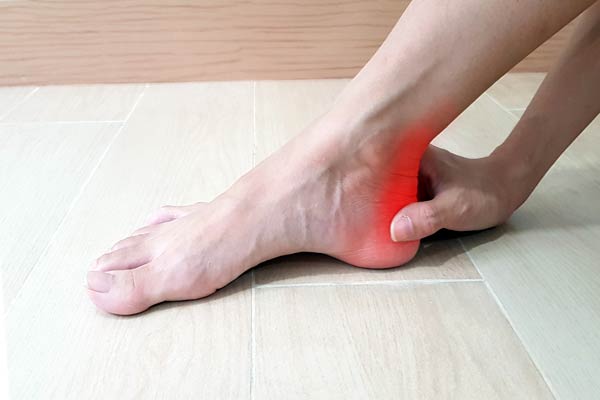
Insertional Achilles Tendinopathy involves the lower part of the tendon where it attaches to the heel bone (calcaneus). Often accompanied by bone spurs and calcification, this type can affect anyone, regardless of activity level. The area may also develop a bursa (fluid-filled sac) that becomes inflamed.
In addition to tendinitis, we frequently treat partial and complete Achilles tendon injuries and tears, which require immediate professional attention and specialised treatment approaches.
Activity-Related Factors
- Sudden increases in exercise intensity or duration
- Repetitive stress from running, jumping, or dancing
- Poor training techniques or inadequate warm-up routines
- Return to activity after a period of inactivity
Biomechanical Factors
- Tight calf muscles or limited ankle flexibility
- Overpronation (excessive inward rolling of the foot)
- Leg length discrepancies
- Poor footwear choices or a lack of orthotic devices
Individual Risk Factors
- Age-related changes in tendon structure
- Previous Achilles tendon injuries
- Certain medications (such as fluoroquinolone antibiotics)
- Medical conditions affecting circulation or healing

Symptoms of Achilles Tendinitis
Recognising the symptoms of Achilles tendinopathy early can help prevent the condition from worsening:
- Morning stiffness and pain along the Achilles tendon that may improve with gentle movement
- Pain during or after exercise that may worsen with increased activity levels
- Tenderness to touch along the tendon, particularly in the morning
- Thickening of the tendon that may be visible or felt as a lump
- Reduced ankle flexibility and difficulty pointing your toes
- Swelling that may fluctuate throughout the day
- Creaking sensation (crepitus) when moving the ankle
- Bone Spurs are where bony growths can form around your ankle joints
How We Diagnose Achilles Tendinopathy
At Coastal Podiatry, we take a comprehensive approach to diagnosis:
Clinical Assessment:
- Detailed discussion of your symptoms, activity levels, and medical history
- Physical examination of your foot, ankle, and lower leg
- Assessment of your walking pattern and biomechanics
- Evaluation of ankle flexibility and calf muscle strength
Diagnostic Tests: When necessary, we may recommend imaging studies such as an ultrasound or refer for an MRI scan to assess the extent of tendon damage and rule out other conditions.
Biomechanical Analysis: We examine how your foot functions during movement to identify any contributing factors that may need addressing as part of your treatment plan.
Book Your Achilles Tendinitis Assessment Today
Don’t let Achilles tendon pain limit your activities or quality of life. Our experienced team at Coastal Podiatry is here to help you understand your condition and develop an effective treatment plan.
Comprehensive Treatment Options
Our treatment approach focuses on reducing pain, promoting healing, and addressing underlying causes to prevent recurrence:
Conservative Treatment Options
Targeted exercises designed by our physical therapists plan to strengthen your calf muscles, improve flexibility, and restore normal movement patterns. Our physical therapy programmes are tailored to your specific needs and activity goals.
This advanced technology uses specific wavelengths of light to reduce inflammation, decrease pain, and accelerate tissue and tendon repair. The treatment is comfortable and typically requires no downtime.
Acoustic waves stimulate the body's natural healing processes, promoting tissue regeneration and improving blood flow to the affected area. Extracorporeal Shock Wave Therapy treatment has shown excellent results for chronic Achilles tendinopathy.
Prescription foot orthotics can help correct biomechanical issues that contribute to Achilles tendon stress. These devices are custom-made based on a detailed analysis of your foot structure and function. Ensuring you have the right, supportive shoes is an important step in prolonged recovery.
This regenerative treatment involves targeted injections that encourage the body's natural healing response, promoting tissue repair and providing pain relief.
Activity Modification and Education
We provide guidance on:
- Appropriate activity levels during recovery
- Proper warm-up and cool-down techniques
- Footwear recommendations
- Training modifications to prevent re-injury
Rehabilitation Protocols and Recovery for Achilles Tendinopathy
Recovery from Achilles tendinitis varies depending on several factors, including the severity of the condition, how long symptoms have been present, and individual healing responses.
Typical Recovery Timeline:
- Acute symptoms often improve within 2-6 weeks with appropriate treatment
- Complete healing may take 3-6 months for chronic cases
- Return to full activity levels depends on individual progress and treatment response
What to Expect During Recovery:
- Gradual reduction in pain and stiffness
- Improved flexibility and strength
- Progressive return to normal activities
- Ongoing monitoring to prevent recurrence
We’ll work closely with you throughout your recovery, adjusting your treatment plan as needed and providing guidance on when it’s safe to return to your preferred activities.
When to Seek Professional Help
You should consult our podiatrist if you experience:
- Persistent Achilles tendon pain lasting more than a few days
- Morning stiffness that doesn’t improve with gentle movement
- Pain that worsens with activity
- Swelling or thickening along the tendon
- Any sudden, severe pain that might indicate a tendon rupture
Seek immediate medical attention if you experience sudden, severe pain in your Achilles tendon, hear a “pop” sound, or are unable to point your toes downward, as these may indicate a tendon rupture.
Prevention Strategies
Preventing Achilles tendinopathy involves addressing risk factors and maintaining good tendon health:
Exercise Guidelines:
- Gradually increase activity intensity and duration
- Include regular calf stretching in your routine
- Strengthen your calf muscles with appropriate exercises
- Allow adequate recovery time between intense activities
Footwear Considerations:
- Choose appropriate shoes for your activities
- Replace worn-out athletic shoes regularly
- Consider heel lifts if recommended by your podiatrist
- Avoid sudden changes in heel height
Lifestyle Factors:
- Maintain a healthy weight to reduce stress on your tendons
- Stay hydrated to support tissue health
- Address any biomechanical issues early
- Listen to your body and rest when experiencing pain
Why Choose Coastal Podiatry for Achilles Tendinitis Treatment
Advanced Technology
We utilise the latest treatment modalities, including MLS Laser Therapy and Shockwave Therapy, which are not available at all clinics.
Comprehensive Approach
Rather than simply treating symptoms, we identify and address underlying causes to provide long-term solutions.
Convenient Options
We offer both in-clinic appointments and home visit podiatry services for your convenience.
Personalised Care
Rehabilitation protocol for every treatment plan is tailored to your specific needs, lifestyle, and goals.
Experienced Team
Our podiatrists have extensive experience treating Achilles tendon conditions across all age groups and activity levels.
Frequently Asked Questions
Whilst mild cases may improve with rest and basic self-care measures, professional treatment significantly improves outcomes and reduces the risk of the condition becoming chronic. Early intervention is particularly important for preventing complications such as tendon rupture.
Recovery time varies considerably based on factors such as the severity of the condition, how long symptoms have been present, and individual healing responses. Acute cases may resolve within 2-6 weeks, whilst chronic conditions may require 3-6 months of treatment.
Complete rest is rarely necessary. We typically recommend modifying your activities rather than stopping them entirely. This might involve reducing intensity, changing to low-impact activities, or focusing on specific exercises that promote healing.
Surgical treatment is considered only when conservative treatments have not provided adequate improvement after several months. In cases of a complete Achilles rupture, a tendon transfer could be a potential option. The vast majority of Achilles tendinitis cases respond well to non-surgical treatment and don’t need major treatments such as a tendon transfer.
Yes, custom orthotics can be very helpful, particularly when biomechanical factors contribute to the condition. They work by improving foot alignment and reducing stress on the Achilles tendon during movement.
These terms are often used interchangeably, though technically, tendinopathy is a broader term that encompasses both inflammatory (tendinitis) and degenerative changes in the tendon. Your podiatrist will explain the specific nature of your condition during your consultation.
Contact Us Today
For professional care and advanced treatment options for Achilles tendinitis, turn to Coastal Podiatry Foot & Ankle Clinic. Contact us today to take the first step towards relief and improved quality of life.
Book an Appointment
If you’re experiencing pain or discomfort in your feet, ankles, knees, back or lower limbs, book a podiatry appointment today. Our experienced team will provide quality podiatry care, whether that is at our health clinic or at home. We use the latest assessments, technology, and techniques to help resolve your back and foot pain.